Choosing the right Commercial Curtain Wall manufacturer can shape a building’s safety, appearance, and long-term operating cost. Global buyers must look beyond attractive brochures and impressive project photos. They need evidence of engineering capability, production consistency, and reliable international support.
This guide examines leading manufacturers through practical procurement criteria. These include system design, thermal performance, air and water resistance, structural testing, fabrication quality, and installation guidance. It also considers experience with different climates, building types, and project scales. A supplier serving a coastal tower may need stronger corrosion controls than one supplying an inland office complex.
Details matter.
A serious evaluation should include factory audits, laboratory reports, quality certificates, reference projects, and clear warranty terms. Buyers should also ask how manufacturers manage drawing revisions, packaging, shipping damage, and replacement parts. These issues can affect schedules more than the original quotation.
No ranking is perfect. Market information changes, and public project data may remain incomplete. Therefore, this overview should support professional due diligence rather than replace it. Local codes, consultant requirements, and site conditions still require independent verification. Manufacturers with strong reputations can also have weaker performance on a specific project. Careful communication remains essential.
The companies discussed here are assessed for their technical depth, manufacturing resources, project experience, and ability to support global customers. The goal is practical clarity. Buyers should gain a clearer basis for comparing suppliers, reducing avoidable risks, and selecting a Commercial Curtain Wall partner with dependable long-term value.
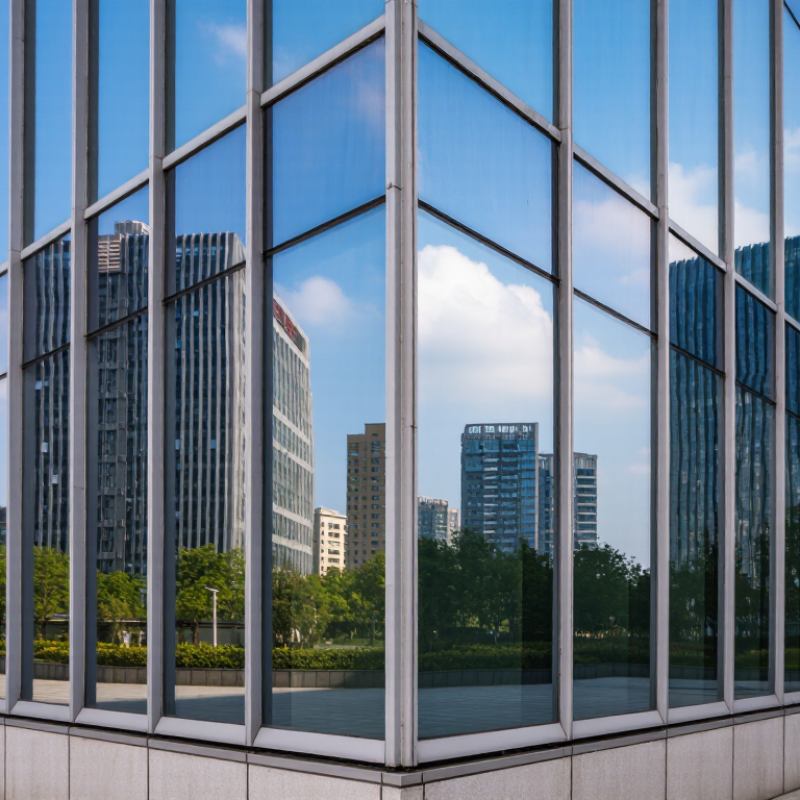
Commercial curtain walls are non-load-bearing exterior systems attached to a building’s structural frame. They usually combine aluminum framing, glass, insulation, gaskets, and carefully designed drainage paths. The structure carries floors and roofs, while the curtain wall controls weather, daylight, and appearance. That distinction matters. On a high-rise site, panels may span several floors and face strong wind, driving rain, heat, and temperature changes.
Their global importance comes from performance, not decoration alone. A reliable system limits air leakage, prevents water penetration, and reduces unwanted heat transfer. It can also improve indoor comfort near the glass line. Testing should cover wind pressure, water resistance, thermal movement, and seismic behavior where required. Local climate data and building codes must guide the design. A solution suitable for a cool coastal city may fail in a hot, dusty region.
Global buyers should examine verified test reports, material traceability, installation details, and replacement access. Factory quality checks are useful, but site workmanship still decides many outcomes. A beautiful specification can miss drainage maintenance or compatible sealants. That mistake is more common than it should be. Buyers also need clear tolerances, delivery schedules, inspection procedures, and long-term warranty terms. Curtain walls are engineered assemblies, yet they remain vulnerable to small gaps, rushed installation, and poorly coordinated interfaces.
| Evaluation Dimension | Commercial Curtain Wall Category or Requirement | Typical Characteristics | Common Commercial Applications | Global Buyer Considerations |
|---|---|---|---|---|
| Basic Definition | Non-load-bearing building envelope | A curtain wall is an external façade system that transfers its own weight and environmental loads to the building structure, while generally not supporting floor slabs or roof loads. | Office buildings, retail centers, hotels, airports, hospitals, and high-rise developments | Confirm structural interfaces, movement allowances, drainage design, and responsibility boundaries between the façade contractor and the main structure. |
| System Configuration | Stick-built curtain wall | Vertical mullions and horizontal transoms are assembled on site, followed by installation of glazing or opaque panels. | Low- to mid-rise buildings, projects with irregular geometry, and locations where site assembly is practical | Usually offers flexible sizing and logistics, but requires careful site supervision, storage planning, and installation quality control. |
| System Configuration | Unitized curtain wall | Large factory-assembled panels are delivered to the site and installed floor by floor. Glazing, gaskets, and many accessories can be integrated before delivery. | High-rise offices, residential towers, hotels, and projects with repetitive floor layouts | Factory quality can improve consistency and installation speed, while transportation limits, lifting plans, and early design coordination become especially important. |
| System Configuration | Semi-unitized or hybrid system | Combines factory-prepared components with site-installed framing or panels to balance prefabrication and project-specific flexibility. | Buildings requiring moderate repetition with customized façade zones | Review installation sequencing, interface tolerances, and the division of factory and site quality responsibilities. |
| Frame Material | Thermally improved aluminum framing | Aluminum provides relatively low weight, corrosion resistance, and fabrication flexibility. Thermal breaks reduce direct heat flow through the frame. | Most contemporary commercial façade projects | Specify alloy, finish, thermal-break configuration, drainage paths, and compatibility with adjacent materials. |
| Glazing Option | Insulating glass unit | Two or more panes separated by a sealed cavity. The cavity may contain air or an inert gas, and low-emissivity coatings may improve thermal performance. | Climate-controlled offices, hotels, educational buildings, and healthcare facilities | Compare center-of-glass values with whole-window performance, and verify spacer, sealant, coating, and replacement requirements. |
| Glazing Option | Laminated or heat-treated safety glass | Heat-treated glass can improve resistance to thermal stress and impact, while laminated glass retains fragments after breakage and can support safety or acoustic objectives. | Entrances, overhead or impact-prone areas, public buildings, and façades with safety requirements | Identify required safety-glazing zones, glass thickness, interlayer type, edge conditions, and local code requirements. |
| Opaque Zone | Spandrel glass or insulated opaque panel | Used to conceal floor edges, columns, insulation, and mechanical areas behind the façade. Spandrel zones require careful control of heat build-up and visual consistency. | Multi-story office façades and buildings with continuous glazed elevations | Coordinate fire containment, insulation, shadow-box details, color matching, and ventilation of concealed cavities where required. |
| Structural Performance | Wind, dead load, seismic, and building movement resistance | The system must be engineered for site-specific wind pressure, suction, gravity loads, inter-story drift, thermal movement, and other applicable actions. | Low-rise through high-rise commercial buildings | Provide project location, building height, exposure, design wind data, seismic conditions, slab-edge details, and allowable movement criteria before final selection. |
| Water Management | Pressure-equalized drainage and weather sealing | Joints, gaskets, pressure chambers, weeps, and flashings work together to resist water penetration and drain incidental moisture to the exterior. | All exterior curtain wall installations, particularly exposed high-rise façades | Request tested details for corners, transitions, interfaces, operable vents, and penetrations rather than evaluating only standard panel areas. |
| Air Performance | Air infiltration control | Continuous seals, gaskets, pressure plates, splice joints, and perimeter interfaces limit uncontrolled air movement through the façade. | Conditioned commercial buildings and projects with strict energy targets | Review air-leakage test results, field quality procedures, and continuity between curtain wall, slab edge, roof, and adjacent wall systems. |
| Thermal Performance | U-factor, thermal transmittance, and condensation control | Performance depends on framing, glass, spacers, opaque panels, edge conditions, interior humidity, and exterior climate—not glass alone. | Buildings in cold, hot, humid, or highly variable climates | Use the applicable regional calculation method and check whole-system performance, interior surface temperatures, thermal bridges, and condensation risk. |
| Solar Control | Solar heat-gain and glare management | Low-emissivity or solar-control coatings, fritted glass, external shading, internal shading, and façade orientation influence cooling demand and occupant comfort. | Glazed offices, atriums, hotels, airports, and buildings with large east-, south-, or west-facing elevations | Balance visible light transmission, solar heat-gain coefficient, glare control, views, daylight goals, and local energy requirements. |
| Fire and Life Safety | Spandrel fire containment and perimeter protection | Floor-line fire stopping, safing, back pans, insulation, and perimeter joints help limit fire and smoke spread between floors, subject to the adopted code and tested assembly. | Multi-story buildings and façades crossing multiple fire compartments | Require tested or approved details for the complete floor-edge assembly, including slab edge, safing, anchors, back pans, and sealants. |
| Acoustic Performance | Exterior noise reduction | Sound insulation is influenced by glass thickness, laminated interlayers, air gaps, framing, vents, spandrels, and perimeter joints. | Hotels, offices near transport corridors, hospitals, schools, and mixed-use developments | Specify the required rating using the applicable local acoustic method and assess the complete façade rather than a single glass sample. |
| Finish and Durability | Anodized or painted aluminum finish | Factory-applied anodized and organic coatings provide different appearance, maintenance, color, and weathering characteristics. | Interior and exterior commercial façades in urban, coastal, and industrial environments | Define color, gloss, allowable variation, coating class, warranty terms, surface preparation, and exposure category. |
| Testing and Verification | Laboratory and field performance testing | Typical verification may include air leakage, static or dynamic water penetration, structural loading, thermal assessment, operability, and field mock-up testing. | Projects with demanding performance specifications or complex interfaces | Use project-specific mock-ups where practical and agree in advance on test standards, acceptance criteria, corrective actions, and retesting procedures. |
| Applicable Standards | Regional building codes and façade test standards | Requirements vary by jurisdiction and may reference standards from organizations such as ASTM, AAMA, EN, ISO, AS/NZS, or local code authorities. | International procurement and projects involving multiple design jurisdictions | Do not assume that a product tested under one regional standard automatically satisfies another jurisdiction; confirm equivalency with the project consultant and authority having jurisdiction. |
| Sustainability Factors | Embodied carbon, operational energy, and material transparency | Whole-life impact is affected by aluminum content, recycled material, glass selection, thermal performance, service life, maintenance, repairability, and end-of-life recovery. | Green-certified offices, public buildings, and projects with environmental product requirements | Request environmental product declarations, recycled-content information, responsible sourcing data, durability documentation, and disassembly or recycling provisions where relevant. |
| Procurement Criteria | Engineering, manufacturing, logistics, installation, and after-sales capability | A reliable supplier must coordinate design development, shop drawings, samples, testing, fabrication, packaging, delivery, installation support, and warranty service. | Cross-border commercial construction projects | Evaluate technical submittals, production capacity, quality systems, export packaging, lead times, spare parts, documentation, local support, and contractual responsibility. |
Note: Performance values and compliance requirements must be confirmed through project-specific engineering, calculations, approved drawings, testing, and the building codes applicable at the project location.
It is a non-load-bearing exterior system attached to a building’s structural frame. The frame carries floors and roofs. The curtain wall manages weather, daylight, insulation, and appearance.
Typical systems combine aluminum framing, glass, insulation, gaskets, and drainage channels. Small components matter. A damaged gasket can create a serious leak.
A reliable system limits air leakage, water entry, and unwanted heat transfer. It can improve comfort beside large glass areas. Appearance alone is not enough.
Testing should examine air infiltration, water penetration, wind pressure, thermal movement, and structural behavior. Seismic testing may apply in certain regions. Independent laboratory results provide stronger evidence.
Local wind, rain, temperature, dust, and sunlight must guide the design. A system suited to a cool coastal city may fail in a hot region. Climate assumptions need checking.
Specify wind pressure, thermal targets, water resistance, fire requirements, glass composition, and local codes. Include tolerances, delivery dates, inspection steps, and warranty terms. Vague requirements create expensive disputes.
A mock-up shows how the assembled system performs before mass production. Test air, water, structural, and thermal behavior. Calculations help, but they do not expose every installation weakness.
Request drawings, material schedules, test reports, warranties, production details, and delivery terms. Check material traceability and revision records. Keep one approved sample and one signed revision log.
No. Factory inspections are useful, but site workmanship strongly affects performance. Poor alignment, rushed sealing, and uncoordinated interfaces can create leaks. That assumption fails.
Confirm packing, container loading, customs documents, storage conditions, and delivery responsibilities. Allow extra time for port delays and late approvals. I would still challenge the schedule.
Commercial Curtain Wall systems play an important role in modern commercial construction by combining exterior protection, energy efficiency, natural lighting, and architectural appearance. For global buyers, selecting the right manufacturer requires more than comparing prices. Important evaluation criteria include engineering capability, material quality, structural performance, thermal and weather resistance, production capacity, quality control, project experience, and compliance with relevant international standards and certifications.
This overview explains how leading manufacturers can be assessed by market strength, technical expertise, service capability, and delivery reliability. It also discusses how international buyers compare product specifications, customization options, testing documentation, warranties, installation support, and after-sales service. For overseas projects, a clear purchasing process is essential, beginning with design requirements and technical communication, followed by quotation review, sample approval, contract confirmation, production inspection, shipping coordination, and installation planning. By evaluating both products and long-term cooperation capabilities, buyers can make informed decisions and reduce project risks.

 Suozhe Windows