China Best Automatic Lift Windows for Global Buyers? This question deserves more than a factory price or polished product photo. Automatic LiftWindows combine motorized movement, sensors, control panels, and reinforced window hardware. Their value depends on safety, durability, installation quality, and reliable after-sales support.
Dr. Stephen Selkowitz, a respected building-energy researcher, has said, “Windows are the most dynamic part of the building envelope.” That observation remains highly relevant. A lift window can improve ventilation and accessibility. It can also reduce manual effort in high atriums, offices, hotels, and residential projects. However, performance depends on the complete system, not the motor alone.
Global buyers should examine load capacity, opening speed, noise levels, emergency operation, weather sealing, and maintenance access. Ask for test records, wiring diagrams, material specifications, and installation guidance. Check whether the supplier can support local electrical requirements and project-specific safety expectations. Factory production photos are useful. Independent inspection is stronger.
China offers broad manufacturing experience and flexible customization. Some suppliers provide excellent engineering. Others rely heavily on attractive samples. That difference matters. A window that operates smoothly in a showroom may struggle under dust, humidity, or repeated daily use.
Buyers should compare frame construction, glass options, control compatibility, spare-part availability, and warranty terms. They should also request a sample before placing a large order. No system is perfect. Even experienced buyers can overlook installation details. This guide explores how to assess Chinese Automatic LiftWindows with practical judgment, technical questions, and realistic expectations.
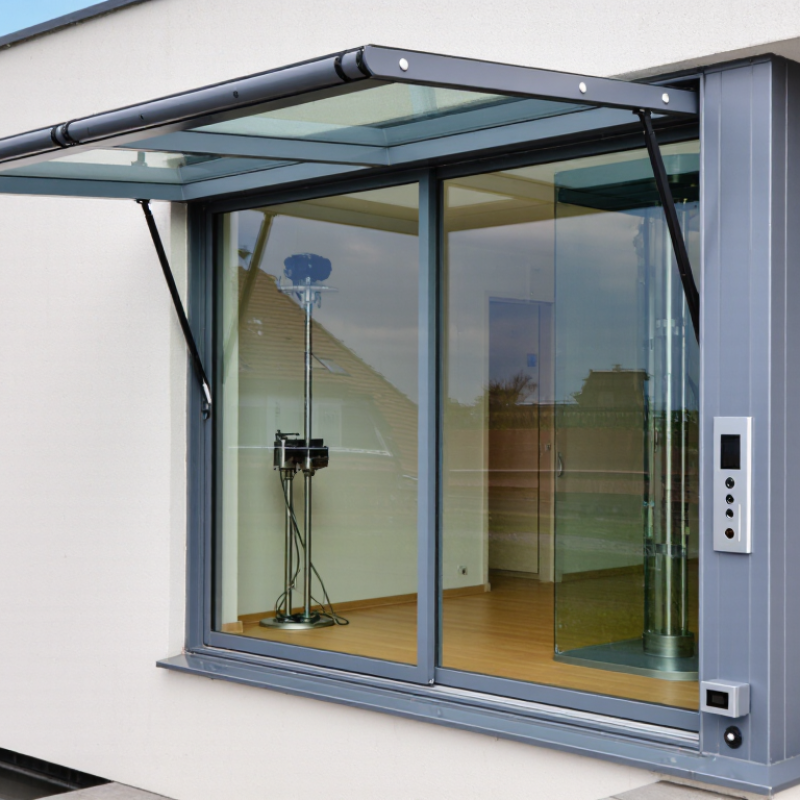
Automatic lift windows are motorized vertical windows that open and close with a wall switch, remote control, or smart-building system. A tubular motor or linear actuator moves the sash along side tracks. Sensors monitor position, resistance, and obstructions. If the glass meets a hand or object, the controller should stop or reverse movement.
Some systems connect to temperature, rain, smoke, or air-quality sensors. The window may open during mild weather and close when rain begins. However, automatic control is not always intelligent. Poor sensor placement can trigger unnecessary movement. Manual override remains important during power failure or maintenance.
The U.S. Department of Energy reports that windows can account for 25–30% of residential heating and cooling energy use. This makes frame quality, glazing, sealing, and motor control equally important. The International Energy Agency’s 2023 buildings analysis also highlights the sector’s major role in global energy demand. Automatic operation can support ventilation and shading, but it cannot repair weak insulation.
Professional testing should examine U-factor, solar heat gain coefficient, air leakage, noise, cycle durability, and pinch protection. The term “automatic lift window” is not fully standardized across markets. Buyers should request wiring diagrams, load ratings, emergency release details, and test records. A smooth first demonstration means little without long-term reliability data.
This engineering example shows how the gross opening area changes as a motorized window sash rises. The calculation uses a fixed 1.20 m window width and the formula: gross opening area = window width × lift height. An automatic lift window typically combines an electric actuator, control switch or sensor, limit controls, and safety protection. Actual airflow depends on wind pressure, opening geometry, screens, and the building ventilation design.
China-made automatic lift windows combine practical automation with flexible architectural design. Their core feature is a motorized sash that rises or lowers smoothly through a wall switch, remote control, or building system. Some models also support sensors for rain, temperature, and indoor air quality.
Aluminum frames resist moisture and daily wear, while double glazing can reduce outside noise and heat transfer. Low-emissivity glass may improve indoor comfort, although performance depends on the glass specification and installation quality. Strong lifting mechanisms matter for large panels. A window that looks impressive can still operate poorly if the motor is undersized.
Safety features deserve close attention. Obstacle detection can stop the sash when a hand, toy, or object enters the closing path. Manual release is useful during power interruptions. Buyers should request information about load testing, insulation values, drainage design, and control compatibility. Clear wiring diagrams also reduce installation mistakes.
Factory experience often shows that customization is possible, but excessive customization may increase maintenance difficulty. This is worth questioning. Ask for sample testing, operating-cycle data, spare-part availability, and documented quality inspections before placing a large order. Installation teams should verify wall alignment and drainage on site, because even a reliable window may leak when fitted carelessly.
| Data Dimension | Typical Specification or Value | Key Buyer Consideration |
|---|---|---|
| Window Type | Motorized vertical-lift window; single-sash, double-sash, or counterbalanced design | Select the structure according to opening size, sash weight, ventilation needs, and installation position. |
| Frame Materials | Powder-coated or anodized aluminum; thermally broken options are available | Thermal-break frames generally provide better insulation than standard aluminum frames. |
| Typical Sash Width | Approximately 500–1,500 mm per sash, depending on design and glass weight | Large sashes require verified load calculations and stronger lifting hardware. |
| Typical Window Height | Approximately 800–2,400 mm, subject to project-specific engineering | Confirm transport dimensions, installation clearance, and structural support before ordering. |
| Lifting Capacity | Common project range: approximately 50–300 kg per sash | The required capacity depends on glass thickness, frame weight, friction, and safety margin. |
| Opening Stroke | Typically 300–1,000 mm; custom travel lengths may be engineered | A longer stroke improves ventilation but may require additional guiding and protection. |
| Operating Speed | Generally about 5–15 mm/s for controlled vertical movement | Lower speed supports smoother movement and helps reduce impact at the end of travel. |
| Power Supply | Commonly 24 V DC; some systems use 100–240 V AC input with a control unit | Match the control system with the electrical standard and safety requirements of the destination market. |
| Control Methods | Wall switch, remote control, building-management integration, sensor, or timer | Confirm communication protocols, wiring diagrams, access control, and commissioning support. |
| Safety Functions | Obstacle detection, overload protection, limit switches, manual override, and anti-drop measures | Request safety test records and verify that emergency operation remains possible during power loss. |
| Glass Options | Single, laminated, tempered, double-glazed, or low-emissivity insulated glass | Glass selection affects safety, thermal performance, acoustic performance, and lifting load. |
| Thermal Performance | Typical whole-window U-value: approximately 1.5–3.5 W/m²·K, depending on frame and glazing | Use project calculations rather than frame-only values when assessing energy performance. |
| Air and Water Resistance | Performance varies by gasket system, frame design, drainage, and tested configuration | Ask for test results based on the complete window assembly, not individual components. |
| Noise Performance | Approximately 25–40 dB sound reduction may be achievable with suitable insulated glazing | Actual acoustic performance depends on glass composition, seals, frame joints, and installation quality. |
| Operating Temperature | Common design range: approximately −20°C to +60°C, subject to motor and controller selection | Cold, humid, dusty, or coastal environments may require upgraded seals and corrosion protection. |
| Corrosion Protection | Anodized or powder-coated aluminum with stainless or corrosion-resistant hardware options | Specify coating thickness, salt-spray requirements, and hardware grade for marine or industrial locations. |
| Ingress Protection | Control enclosures and actuators may be available with IP-rated protection, depending on configuration | Verify the IP rating of the complete installed system and exposed electrical components. |
| Installation Method | Factory-assembled units, site-assembled frames, or modular systems with prewired controls | Confirm opening tolerances, anchor locations, electrical routing, and lifting access at the site. |
| Typical Applications | Residential buildings, offices, hotels, atriums, conservatories, commercial façades, and controlled-ventilation areas | Application type determines requirements for weather sealing, fire strategy, ventilation, and access control. |
| Compliance Documentation | Technical drawings, wiring diagrams, material declarations, test reports, installation manuals, and maintenance instructions | Documentation should correspond to the exact configuration supplied for the project. |
| Maintenance Requirements | Periodic inspection of guides, seals, cables or chains, fasteners, safety devices, and electrical connections | A documented maintenance schedule helps preserve lifting performance and reduce unexpected downtime. |
Note: The figures shown are typical industry ranges for preliminary comparison. Final values should be confirmed through project drawings, load calculations, testing, and local building-code requirements.
Automatic lift windows serve different purposes across homes, offices, hotels, and public buildings. Their designs should match the opening direction, wall structure, and local climate.
Vertical sash lift windows move the glass upward through a guided track. They suit narrow façades, high-rise rooms, and spaces needing controlled ventilation.
Motorized sliding lift windows rise slightly before moving horizontally. This action reduces friction and supports wider openings in restaurants, meeting rooms, and residential living areas.
Some systems use telescopic panels for large glazed walls. They create a cleaner view but require accurate installation.
Top-hung automatic windows open outward from the upper frame. They can release warm air near ceilings and work well in offices, schools, and industrial buildings.
Roof-mounted lift windows provide daylight and natural ventilation in atriums or stairwells. Their motors need stronger weather protection because rain, dust, and wind reach the hardware directly.
From practical installation experience, sensors matter as much as motor strength. Rain sensors can close the window quickly, while temperature sensors support scheduled ventilation. Manual override is essential during power failure. It should remain simple. Finger protection and obstacle detection also reduce operational risks. However, sensor settings may react slowly in extreme weather. Engineers should test real site conditions, not rely only on product data. Frame insulation, drainage, emergency access, and regional electrical requirements deserve careful checking before procurement.
Selecting automatic lift windows from China requires more than comparing online prices. Buyers should examine factory capability, product consistency, and service communication. In projects I have reviewed, reliable suppliers provided clear drawings, motor specifications, glass details, and installation instructions. Vague answers created costly delays.
Request a working sample before placing a large order. Check opening speed, noise, load handling, emergency operation, and control compatibility. Test the window repeatedly. A beautiful sample proves little. Ask for records of air, water, wind, and electrical safety testing from recognized laboratories. Verify whether the reports match the exact model, glass thickness, and motor system.
Visit the production site when possible, or arrange a live video inspection. Look for organized assembly areas, traceable materials, trained technicians, and documented quality checks. Review packaging carefully. Heavy window frames need corner protection, moisture control, and clear labels during transport. Ask about spare motors, replacement seals, warranty terms, and response times.
Price still matters. It should not lead the evaluation. I once accepted a low quotation without checking control-system compatibility. The installation required extra adapters and lost time. That mistake changed my supplier checklist. I now compare total delivered cost, testing evidence, production capacity, and after-sales support. Some suppliers communicate confidently but provide weak documentation. That deserves attention. A factory may be capable, yet unsuitable for your project’s climate, building standards, or installation team.
Installation, Safety, Maintenance, and Export Considerations
Automatic lift windows need accurate installation, not just attractive specifications. Measure the opening twice, including sill level and surrounding wall strength. A certified technician should secure the frame, connect the control system, and test smooth movement. Poor alignment can create noise, friction, or uneven glass pressure. I have found that small installation errors become expensive service calls later.
Safety requires obstacle detection, manual override, stable stopping, and accessible emergency controls. Test these functions before handover. Inspect sensors near the closing edge, especially in homes with children or pets. Select laminated or tempered glass according to the project’s local safety requirements. Requirements differ by country. Do not assume one certificate satisfies every market. Maintenance is simple but regular: clean tracks, inspect seals, check fasteners, and test the motor every few months. Moisture and dust can reduce performance. Sometimes, the first maintenance schedule is too optimistic.
Tips: Request installation drawings, wiring diagrams, spare-part lists, and test reports before shipment. Confirm voltage, frequency, plug type, packaging strength, and destination climate. For humid or coastal regions, ask about corrosion-resistant hardware and drainage details. Export documents should match the product description and local customs requirements. Keep a short video of factory testing. It helps resolve disputes. Also, leave service access around the motor. Designers sometimes overlook this space.
Vertical sash windows suit narrow façades and high-rise rooms. They move upward along guided tracks.
Their slight upward movement reduces friction before horizontal travel. This supports wider glass panels in living rooms and meeting spaces.
Top-hung windows open outward from the upper frame. They suit offices, schools, and industrial buildings.
Rain sensors can close windows quickly during sudden showers. Temperature sensors can support scheduled ventilation.
Yes. Manual override allows basic operation when electricity fails. It should remain simple and easy to reach.
Request a working sample and test it repeatedly. Check speed, noise, load handling, emergency operation, and control compatibility.
Request clear drawings, motor specifications, glass details, and installation instructions.
Arrange a site visit or live video inspection when possible. Check organized assembly areas, traceable materials, trained technicians, and quality records.
Compare total delivered cost, testing evidence, production capacity, and after-sales support. The lowest quotation may create extra installation costs.
Automatic LiftWindows are motorized window systems that open and close vertically through electric actuators, remote controls, wall switches, sensors, or smart building platforms. They are designed to improve ventilation, daylight management, accessibility, and energy efficiency in homes, offices, hotels, commercial buildings, and specialized facilities. China-made models may offer features such as quiet motors, insulated frames, customized dimensions, safety stop functions, rain and wind sensors, manual override, and integration with building automation systems. Common types include sliding, vertical sash, skylight, roof, and large-format lift windows, allowing global buyers to select solutions for different architectural and climate requirements.
When evaluating Chinese manufacturers and suppliers, buyers should review material quality, motor performance, testing records, customization capacity, communication, production consistency, packaging, and export experience. Installation should follow professional guidelines, with secure electrical connections, correct load calculations, emergency operation, and protection against pinching or obstruction. Regular inspection of tracks, seals, fasteners, controls, and motors can extend service life. Buyers should also confirm documentation, warranty terms, spare-part availability, shipping protection, and destination-country requirements before placing an order.

Suozhe Windows